Underground Carbon Vaults: Native Prairie Taproot Systems
Modern conventional turfgrass is an ecological anomaly. Common Kentucky bluegrass (Poa pratensis) maintains root depths of a mere two to four inches. When municipal irrigation ceases during seasonal dry spells, turf rapidly senesces or requires continuous synthetic fertilizer inputs. In stark contrast, indigenous prairie forbs deploy complex underground architectural networks that pierce deep clay hardpans.
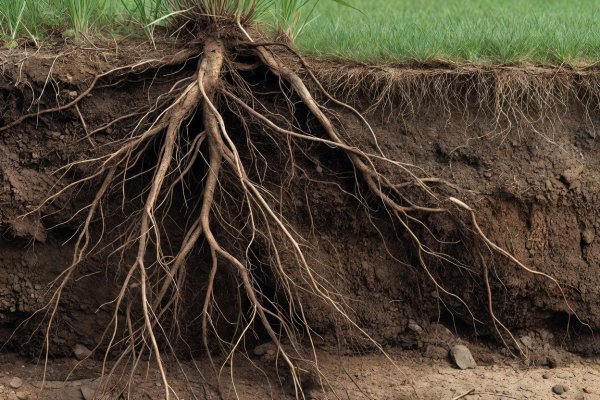
The Subterranean Inverted Forest
Ecologists frequently describe undisturbed native prairies as "upside-down forests." Up to seventy percent of total plant biomass resides permanently below the soil surface.
Every autumn, a portion of fine feeder roots naturally slough off and decompose, depositing humified carbon deep within anaerobic soil horizons where it remains stabilized for decades rather than returning to the atmosphere.
Hydrogeology and Stormwater Infiltration
During heavy precipitation events, compacted suburban lawns behave virtually identically to asphalt: torrential rain runs off the surface, overwhelming municipal storm drains and washing chemical residues into local watersheds.
Native wildflower taproot channels act as direct hydraulic conductors. Research demonstrates that a mature three-year-old native wildflower planting can absorb up to eight inches of rain per hour without runoff, recharging regional aquifers and eliminating garden standing water.
Leadplant (Amorpha canescens)
Possesses one of the deepest known taproots among native legumes, documented penetrating beyond 16 feet (5 meters). Fixes atmospheric nitrogen directly into subsoils.
Pale Purple Coneflower (Echinacea pallida)
Vertical structural taproots reaching 6 to 9 feet. Forms dense symbiotic colonies of arbuscular mycorrhizal fungi that access locked phosphorus reserves.
Compass Plant (Silphium laciniatum)
Stout central taproots exceeding 14 feet with lateral branching, capable of pumping moisture from deep water tables into surface soil layers during cool nights.