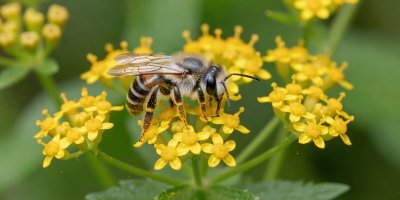
Mining Bees (Andrenidae)
Emerging as early as mid-April from underground burrows in unmulched bare ground. Require early blooming forbs like Golden Alexander (Zizia aurea) and Wild Geranium (Geranium maculatum).
While European honeybees are non-native generalists, North America is home to over 4,000 distinct species of native bees. A staggering proportion of these insects are oligolectic: they rely exclusively on the pollen chemistry of specific native plant families to feed their larvae. When domestic gardens cultivate double-flowered hybrids or non-native cultivars, these specialist bees starve in plain sight.
Emerging as early as mid-April from underground burrows in unmulched bare ground. Require early blooming forbs like Golden Alexander (Zizia aurea) and Wild Geranium (Geranium maculatum).
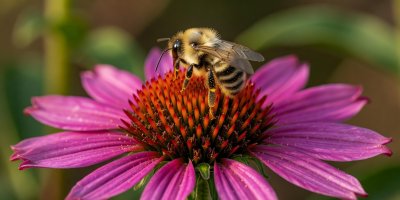
Active from April frost through late October snows. Queens require huge early nectar supplies to initiate colonies; late fall drones and queens need solid goldenrod and aster reserves.
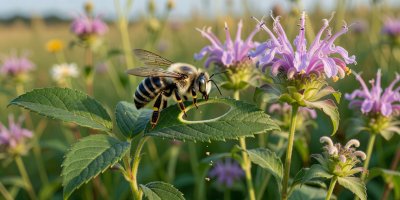
Summer specialists that nest in hollow perennial stems from the previous season. Prefer composite disc flowers including Rattlesnake Master (Eryngium yuccifolium) and Blazing Star.
A fatal mistake in suburban yard management is the manicured autumn "cleanup." Cutting back meadow stems in October strips away the overwintering chambers of over 30% of native bee species, which bore into pithy stems of Monarda, Vernonia, and Helianthus.
Leave standing wildflower stalks intact throughout the entire winter season. Cut back only in late spring (once daytime temperatures consistently exceed 55°F for seven consecutive days), leaving 12 to 18 inches of stubble to serve as fresh nesting tunnels for the oncoming summer generation.
Your privacy choices Essential cookies keep this site working. Optional ones help us see what is useful. You can change your choice at any time. Read more